


AQUAVELORA
AQUAVELORA
✓ Easy at-home nail care
✓ No risk of cuts or bleeding
✓ Files their nails while they play
✓ 90-Day Money-Back Guarantee
Couldn't load pickup availability

AQUAVELORA


Nail care, without the fight
Your dog files their own nails.
You just add a treat.
No clippers. No holding a paw down. No guessing where the quick starts. They scratch to reach the treat, and the nail tips wear down while they do it.
So nothing can be cut too short. Material comes off gradually, at the tip.
Your dog sets the pressure and stops when they want. Nothing is forced.
The treat does the training. Most dogs work it out on the first try.
Why this is so hard
The part you can't see is the part you're afraid of.
Inside every nail is the quick — living tissue with a blood supply and nerve endings. Cut into it and it bleeds, and it hurts. On dark nails you can't see where it starts, so every trim is a guess.
Most dogs only need that to happen once. After that they remember the clippers, and a two-minute job turns into a wrestling match you both dread.
So the trim gets postponed. Nails get longer. Long nails push the toes out of alignment and change how a dog carries weight — which is where the limping, the slipping on hard floors and the sore joints start.
Filing sidesteps the whole problem. There is no cut to get wrong.
About ten seconds to set up
How it works
-
01
Slide the tray open
Pull the red tab on the front edge. The treat well opens underneath the filing surface.
-
02
Drop in their treats
Whatever they already love. Something with a strong smell works best for the first few sessions.
-
03
Slide it shut
Now they can smell it but can't reach it. That gap is what does the work.
-
04
They do the rest
Scratching at the surface to reach the treat wears the nail tips down. Let them go for two or three minutes, then open the tray and let them win.
The details
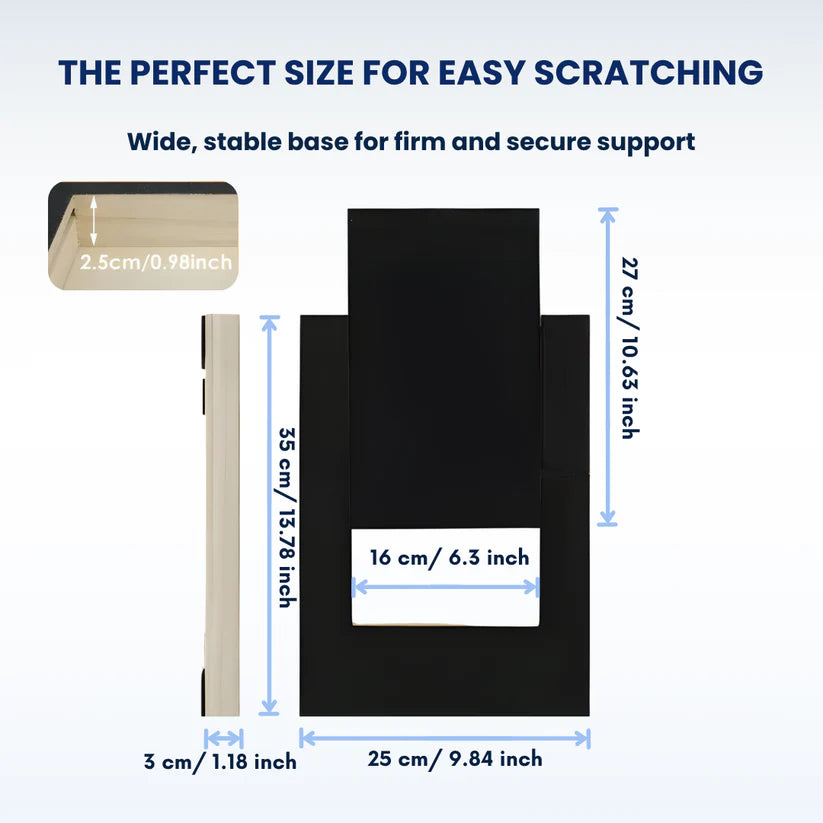
Plywood body, replaceable filing surface, recessed treat tray.
- Board size
- Approx. 30 × 20 cm (12 × 8 in)
- Height
- Approx. 4 cm (1.6 in) — low enough to stay stable
- Body
- Layered birch plywood with sealed edges
- Filing surface
- Bonded abrasive sheet, replaceable
- Treat tray
- Recessed well, opens by the front pull tab
- Base
- Rubber feet to stop sliding on hard floors
- Suits
- Small, medium and large breeds
- Cleaning
- Tip out crumbs, wipe with a damp cloth, air dry
- In the box
- 1 × board, 1 × printed care guide
What the first week actually looks like
Some dogs get it in ten minutes. Others need a few days. Both are normal — here's the honest version so you know what you're looking at.
Let them sniff it with the tray open and treats visible. Don't close it yet. You're teaching them the board is a good thing, not a task.
Close the tray with a strong-smelling treat inside. Most dogs paw at it within a minute or two. If yours doesn't, tap the surface with your hand to show them.
Two or three short sessions. A few minutes each is plenty. You should start seeing scratch marks building on the surface — that's the filing happening.
Two or three sessions a week keeps front nails at a good length. Most owners notice the difference in how their dog walks before they notice the nails.
If your dog still won't engage with it after a couple of weeks of trying, that's what the 90-day guarantee is for. Not every dog takes to every tool.
Is this right for your dog?
A good fit if
- Your dog panics, hides or growls at clippers
- You've cut the quick before and don't want to risk it again
- Your dog has dark nails and you can't see the quick
- You're spending money on groomer visits for nails alone
- Your dog is food-motivated
Probably not if
- You need all four paws done — this handles front nails
- Your dog has zero interest in food or treats
- Nails are already overgrown and painful — see a vet first for a reset
- You need it done today. This is gradual maintenance, not a one-off trim
- Your dog has a paw injury or sore pads
Nail day doesn't have to be a fight.
Put a treat in the tray and let them work it out. If it doesn't click for your dog within 90 days, we'll refund you — no forms, no restocking fee.
Add to cart90-day money-back guarantee · Tracked shipping · Care guide included